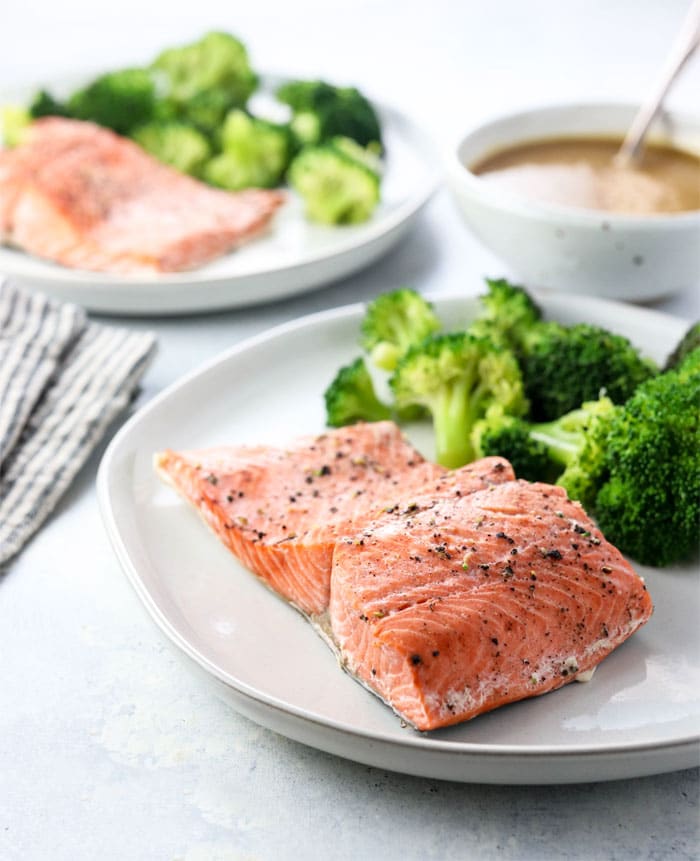
Cooking salmon in the Instant Pot is quick and easy, whether you’re using fresh or frozen fillets. I love this hands-off method for preparing it as an easy weeknight dinner. It’s ready in less than 20 minutes!
Benefits of Salmon
Salmon is loaded with omega-3 fatty acids, which according to the Mayo Clinic may help to reduce your risk of dying from a heart attack. Your body cannot create omega-3 fatty acids on its own, so it’s essential that you get them from your diet. Fish is a great source of two types of these fatty acids, EPA and DHA, and you can find another type, ALA, in plant-based sources like walnuts and flax seeds.
Salmon is also a great source of protein and B vitamins. Just 4 ounces provides 22-23 grams of protein per serving! The vitamins in salmon may help to reduce inflammation and maintain optimal brain function, too.
Which type of Salmon is Best?
When shopping for fish, be sure to look for wild-caught Alaskan salmon . In many cases, farmed salmon can be exposed to more chemicals than the wild-caught variety, and because the farmed salmon is fed high-fat feed to produce larger fish, it also tends to be higher in fat and calories than the wild caught variety.
Can Salmon be Cooked from Frozen?
Yes! All you have to do is add 2 minutes to the cooking cycle. This is why I love the Instant Pot– it takes the hassle out of thawing the fish first, and you can often save money by purchasing it frozen, too.
Can I Cook Vegetables at the Same Time in the Instant Pot?
Yes, sort of. Vegetables turn to MUSH if you cook them at high pressure for 3 minutes.
Total mush.
So, instead of cooking the fish for the full 3 minutes, I recommend cooking it for just 1 minute, then quickly releasing the pressure, removing the lid, and adding your vegetables on top. Secure the lid again then use the manual setting to cook on high pressure for 0 minutes (yes, zero minutes– you read that right) and when the timer beeps again, quickly turn the pressure release valve to venting to release the pressure again. Everything should be cooked perfectly that way!

If you love the Maple Dijon Salmon in my first book, Everyday Detox , try serving my Honey Dijon Dressing over the top for a similar flavor.
IngredientsUS CustomaryMetric1x2x3x
- 1 cup water
- 1 pound wild-caught Alaskan salmon , cut into 4 fillets
- salt & pepper
Instructions
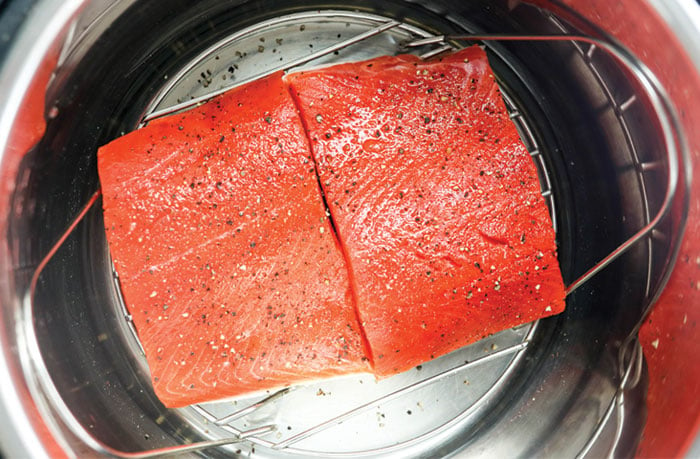
- Pour a cup of water into the Instant Pot and arrange the metal trivet on top. Place the salmon fillets into a single layer on the trivet and sprinkle them generously with salt and pepper.
- Secure the lid and turn the pressure release valve to sealing. Use the manual setting to cook on high pressure for 3 minutes. (If using frozen fish fillets, cook them on high pressure for 5 minutes instead. No need to thaw.)
- When the cooking cycle has completed, quickly turn the pressure release valve to venting to release the pressure. Serve the fish warm with your favorite sauce and side dish. (See the notes in my post above for cooking vegetables with the fish.)
Video
Nutrition
Per Serving: Calories: 161, Fat: 7, Carbohydrates: 0, Fiber: 0, Protein: 22
Recipe Notes:
- I haven’t tested this cooking method for other types of fish, so I can’t say for sure how it will work with other varieties.
- The seasoning options are totally adaptable and up to you– you can keep it simple with salt and pepper, or add a slice of lemon and dill on top, or use your favorite salad dressing to punch up the flavor.
—
Reader Feedback : Have you tried cooking fish in your Instant Pot before? I’m happy to report that the fish smell did not stay in my Instant Pot for long. Whew. (Curry and cumin is much worse when it comes to making the lid smell after cooking.)
Save Save
Save Save Save Save
Instant Pot Salmon (Fresh or Frozen
Ingredients
- 1 cup water
- 1 pound wild-caught Alaskan salmon , cut into 4 fillets
- salt & pepper
Instructions
- Pour a cup of water into the Instant Pot and arrange the metal trivet on top. Place the salmon fillets into a single layer on the trivet and sprinkle them generously with salt and pepper.
- Secure the lid and turn the pressure release valve to sealing. Use the manual setting to cook on high pressure for 3 minutes. (If using frozen fish fillets, cook them on high pressure for 5 minutes instead. No need to thaw.)
- When the cooking cycle has completed, quickly turn the pressure release valve to venting to release the pressure. Serve the fish warm with your favorite sauce and side dish. (See the notes in my post above for cooking vegetables with the fish.)
