Hiccups are one of life’s little annoyances, but once you learn this little trick, you won’t have to suffer with them for long. (And no, you don’t have to drink a glass of water upside down or have someone scare you to get rid of them!)

What are hiccups and what causes them?
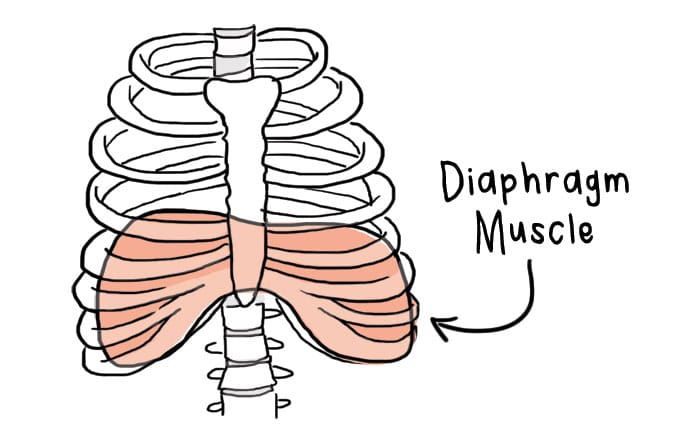
Hiccups are simply involuntary muscle spasms of the diaphragm muscle. They can occur for a number a reasons, including eating too fast and swallowing air, chewing gum, eating or drinking too much, stress or anxiety, or there are more serious causes like nerve damage, brain tumors, and strokes.
While there’s not necessarily an easy fix for those serious causes, when you get hiccups from swallowing air or eating too fast, there is a relatively simple solution– you need to stretch the muscle that’s spasming.
A hiccup fix that actually works.
If you woke up in the middle of the night with a leg cramp or muscle spasms, what would you do?
Stretch it, right?
The same logic applies to hiccups. Your diaphragm muscle needs to be stretched to help stop the spasms.
How to Get Rid of Hiccups:
- To stretch your diaphragm muscle, take a deep breath and hold it for a count of 10.
- Without letting that breath go, take another deep breath and hold it for a count of 10.
- Without letting that breath go, take one more deep breath and hold it for a count of 10. (Or as long as you can at this point– your stomach and lungs should feel VERY full of air.)
- Slowly breathe out and then return to breathing normally.
You’ve just stretched your diaphragm!
By taking all of those deep breaths, you’ll feel your stomach and lungs protrude out, giving that area a nice, deep stretch. I think this is also why drinking lots of water or even being scared can sometimes “work” as a cure for hiccups– because they might also stretch the diaphragm muscle. This method is just a little more direct.
Just one breathing session is usually enough to stop a bout of hiccups , but repeat the above steps if you couldn’t complete them the first time, or if your hiccups return. (Sometimes I’ll have a hiccup during my first round of breathing so I’ll have to start over to get the full stretch in.)
I hope this technique will help you stop hiccups in their tracks the next time they happen to you. Personally, I find them SO ANNOYING, so having this method in my back-pocket is a sanity saver!
—
Save Save Save Save Save Save
Save Save
Save Save
