Paleo and Keto diets are all the rage these days, but, like any other diet, there are healthy and not-so-healthy ways to approach them.
Replacing grain-based breads, crackers, and cookies with nut-based breads, crackers, and cookies can be helpful for those who need to avoid gluten, but relying heavily on these baked goods daily won’t necessarily improve your health.
When done the right way, a grain-free diet should help increase your vegetable intake while also reducing your intake of processed foods and sugary snacks. It’s essentially just a “whole foods” diet, which is why so many all-natural recipes fall into the Paleo category in the first place.
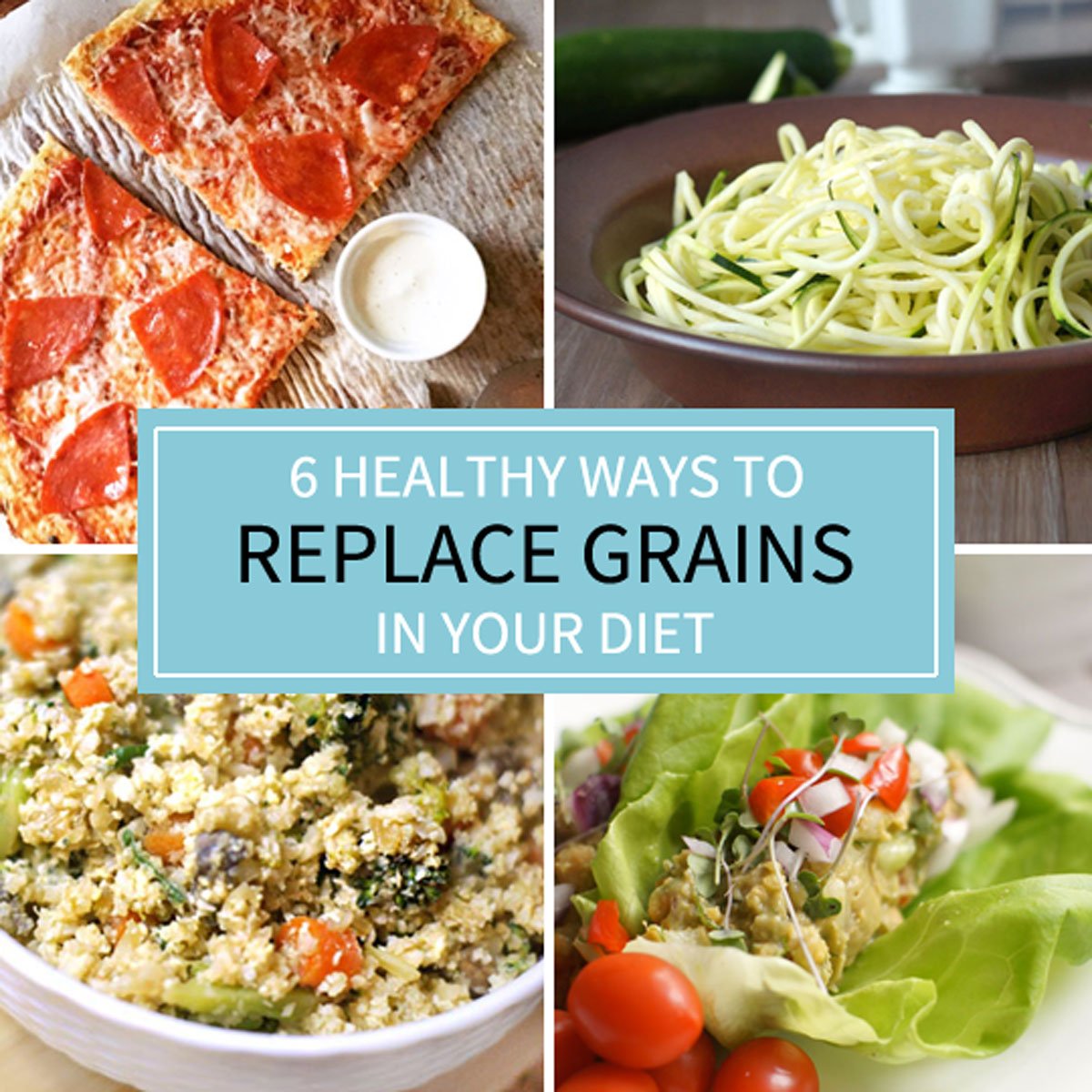
Today, I want to share six ways to replace grains in your diet without relying on heavy, nut-based alternatives. Even if you don’t follow a grain-free diet, the following tips are a great way for anyone to increase their vegetable intake!
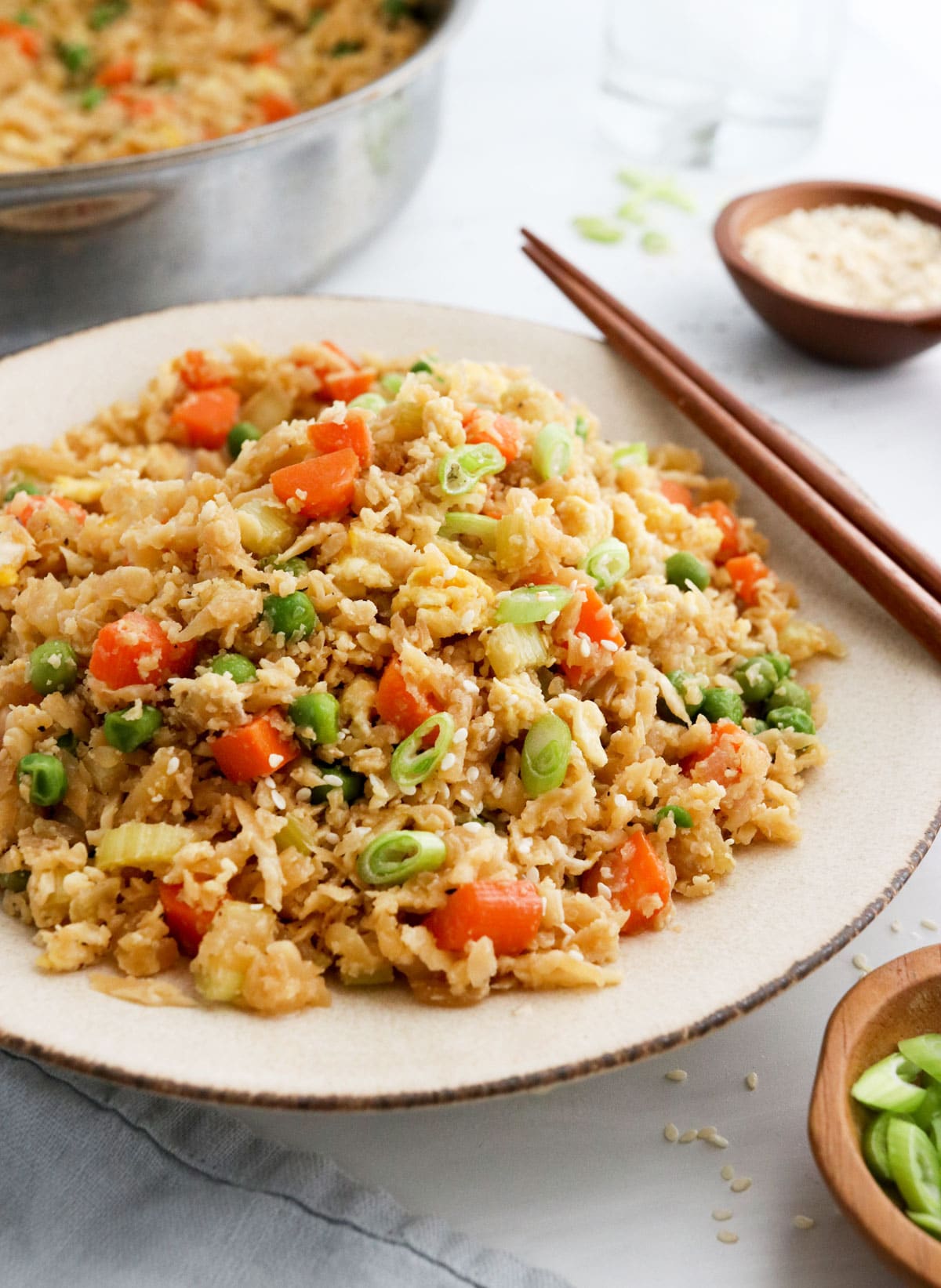
1.Veggie “Rice”
Pulsing vegetables like cauliflower or butternut squash in a food processor creates a texture similar to rice, which can be just as satisfying as using real rice.
Recipes to try:
- Cauliflower Fried Rice
- Mexican Cauliflower Rice Casserole
- Cauliflower Rice Jambalaya
2. Spiralized Veggie “Noodles”
Making “noodles” out of your vegetables can actually be quicker and easier than cooking a box of pasta.
Use a spiral slicer or a traditional vegetable peeler to create flat fettuccine-like noodles from your favorite vegetables, such as zucchini, butternut squash, or sweet potatoes.
Recipes to try:
- Sweet Potato Noodles with Red Pepper Sauce
- Summer Squash Noodles with Herbs

3. Cooked vegetables as “pasta”
If you’d prefer to skip the fancy spiral slicers, a simple bed of steamed vegetables makes an excellent base for your favorite pasta sauce. Some of my favorite options include steamed cauliflower, broccoli, spinach, and zucchini.
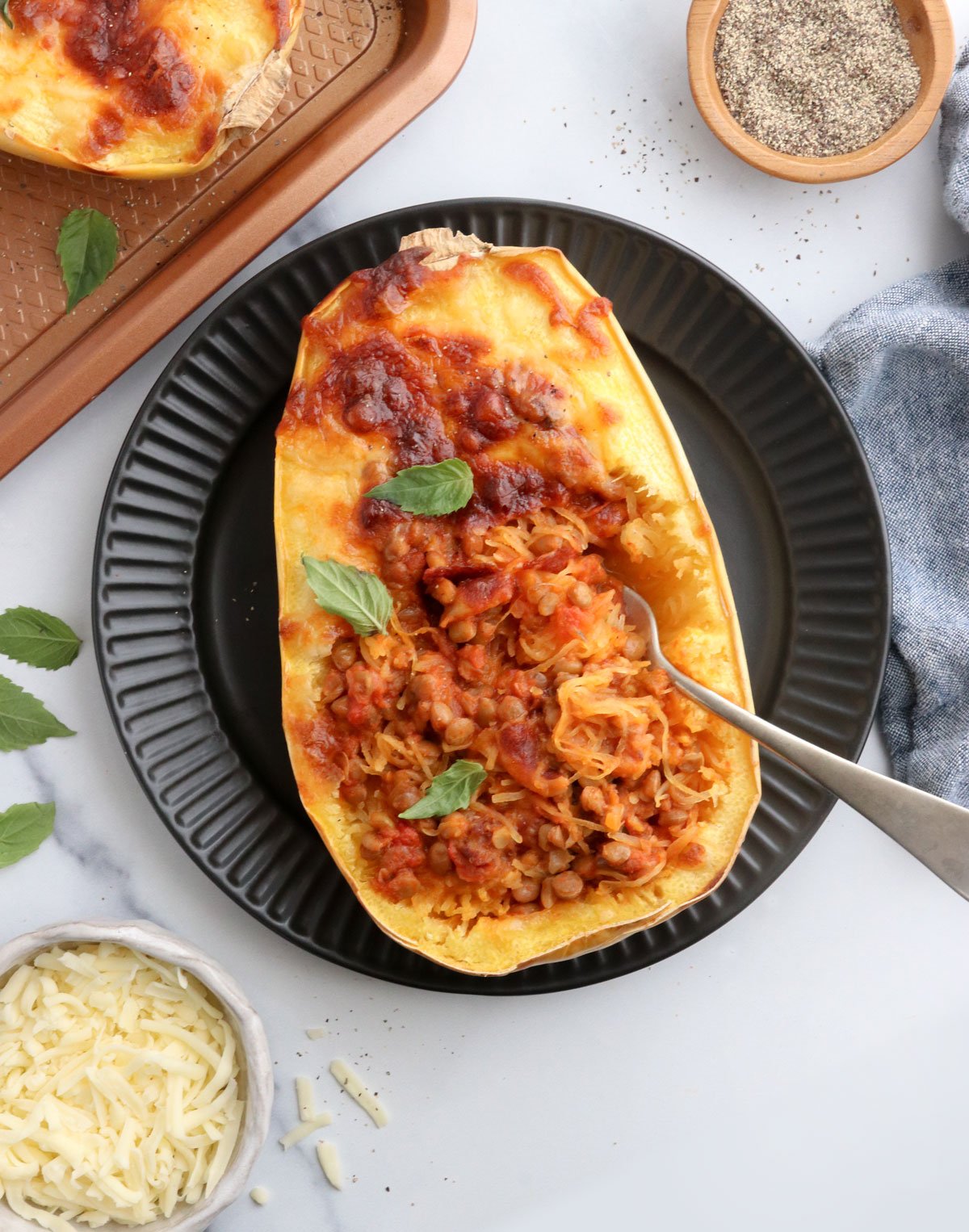
Sauteed cabbage also serves as a substitute for spaghetti. I sneak this into my family’s healthy spaghetti night, and my kids love it. Or, try baked spaghetti squash, which is naturally noodle-like without the need for special tools.
Recipes to try:
- Pizza Roasted Veggies
- Stuffed Spaghetti Squash
4.Veggie Pizza Crust
Vegetable-based pizza crusts have gained popularity over the past decade and are now available for purchase in the frozen food section. But none of the store-bought options taste quite as delicious as my homemade version.
You can also use thinly sliced and roasted vegetables as a “pizza crust” with less effort.
Recipes to try:
- Cauliflower Pizza Crust
- Vegan Cauliflower Pizza Crust
- Eggplant Pizzas
- Sweet Potato Pizza

5. Veggie lasagna noodles
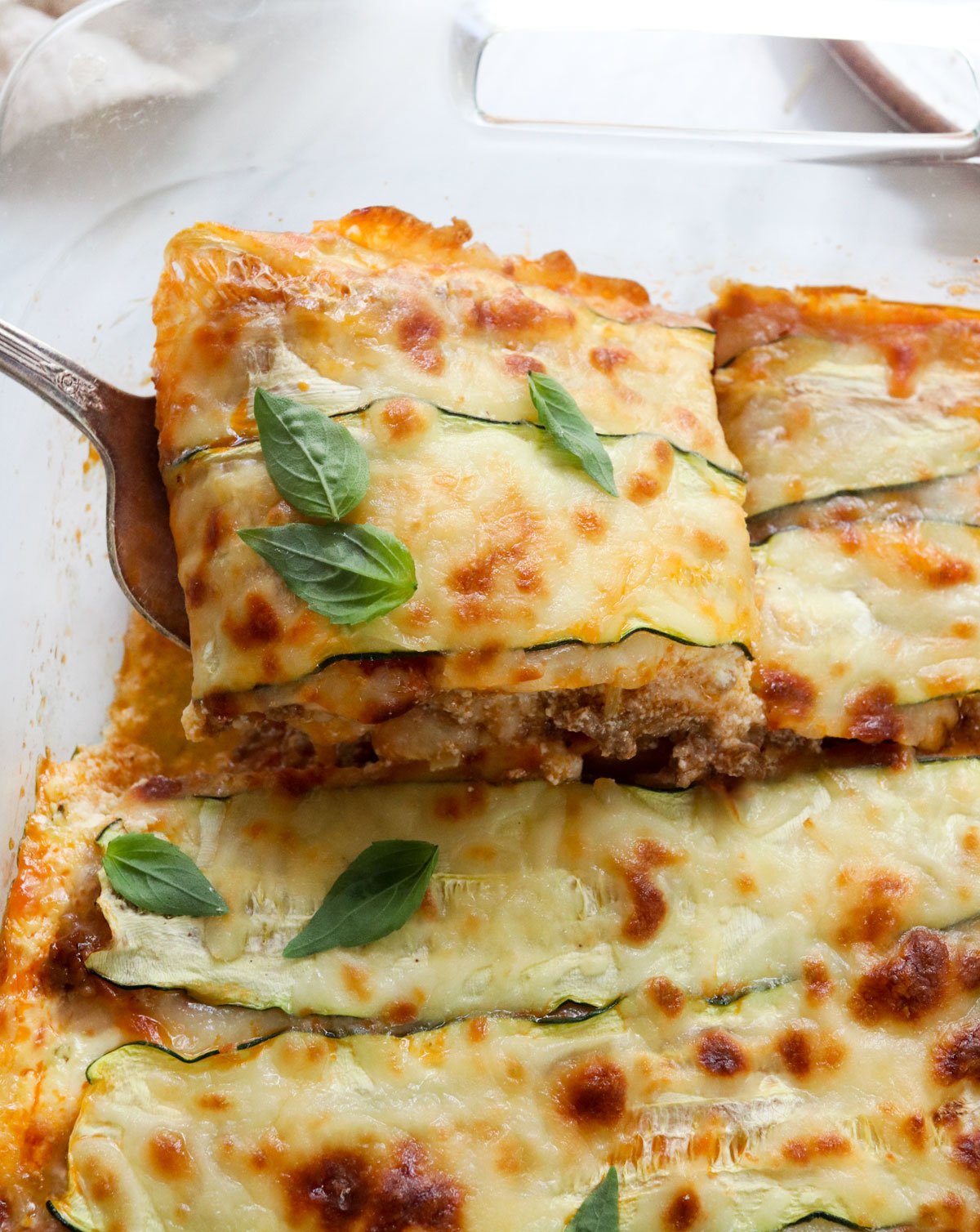
You can thinly slice vegetables, such as eggplant or zucchini, to make lasagna “noodles.” A mandoline slicer will help you make consistent slices.
Recipes to try:
- Zucchini Lasagna
- Eggplant Lasagna
- Sweet Potato Lasagna
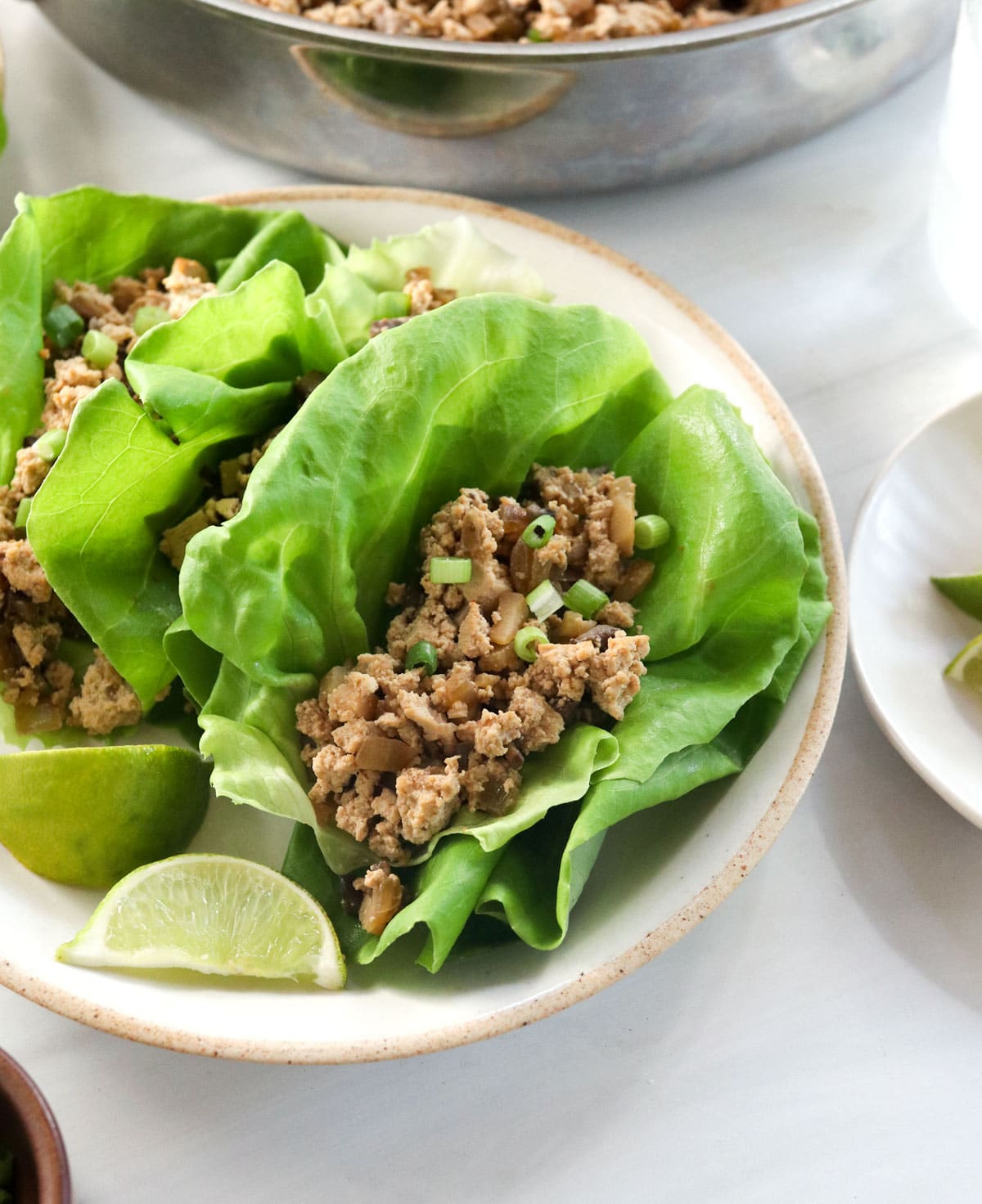
6. Lettuce Wraps and Sliders
There’s no need to bake a grain-free bun when a lettuce wrap is SO much easier! Try using butter lettuce for a velvety wrap that you can fold in half, or collard leaves to roll up your favorite sandwich or burger fillings.
You can also use roasted sweet potato slices to make a mini slider bun.
Recipes to try:
- Vegetarian Lettuce Wraps
- Sweet Potato Sliders